Address
Industrial Zone, Xinxiang City, Henan Province, China
Work Hours
Monday to Friday: 7AM - 7PM
Weekend: 10AM - 5PM

Introduction: The Confusion in the Air
When it comes to working at height, two pieces of machinery dominate the job site: the Scissor Lift and the Cherry Picker (formally known as a Boom Lift). Both are Mobile Elevating Work Platforms (MEWPs), designed to safely lift workers and tools. However, despite their shared goal—getting you off the ground—they are fundamentally different tools built for very different jobs.
This guide will eliminate the confusion by breaking down the core mechanics, functions, and ideal applications of these two powerful lifts. Understanding their differences is key to maximizing efficiency, ensuring safety, and staying within budget on your next project.
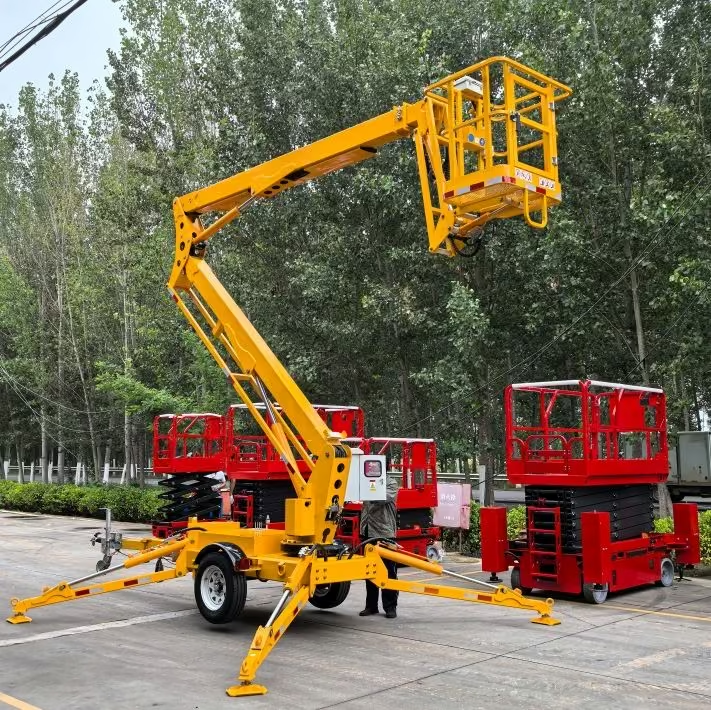
Before we compare, let’s establish simple definitions for each:
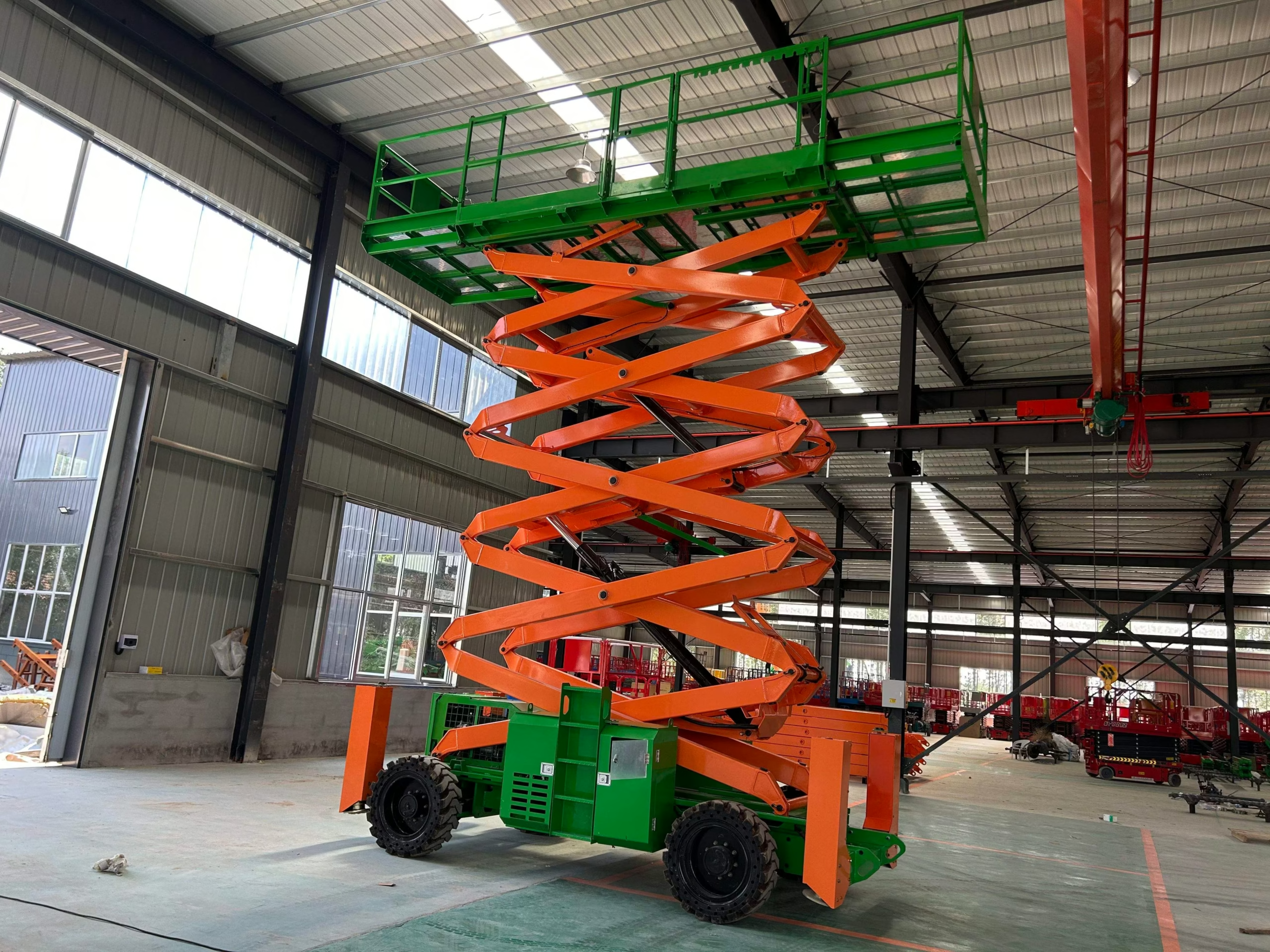
A Scissor Lift is characterized by its distinctive lifting mechanism: a series of crisscrossing metal supports (like scissors) that push the platform directly upwards.
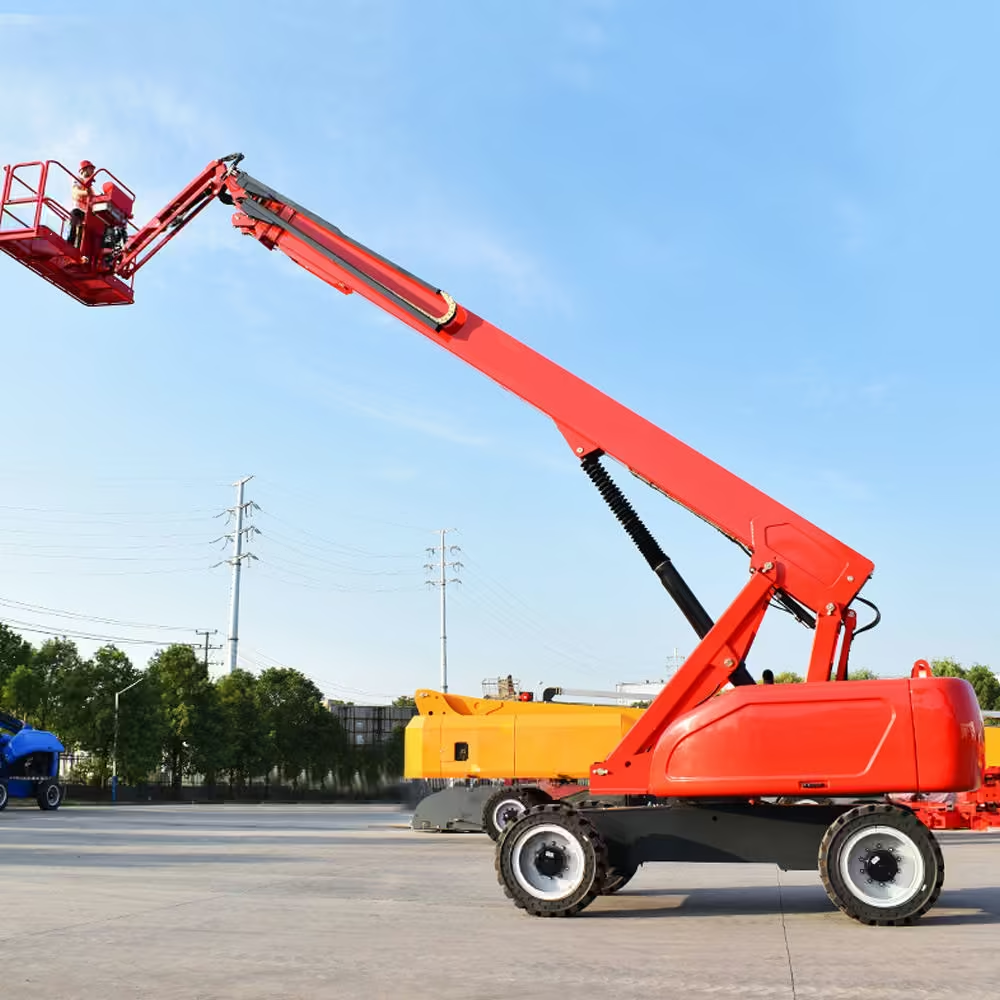
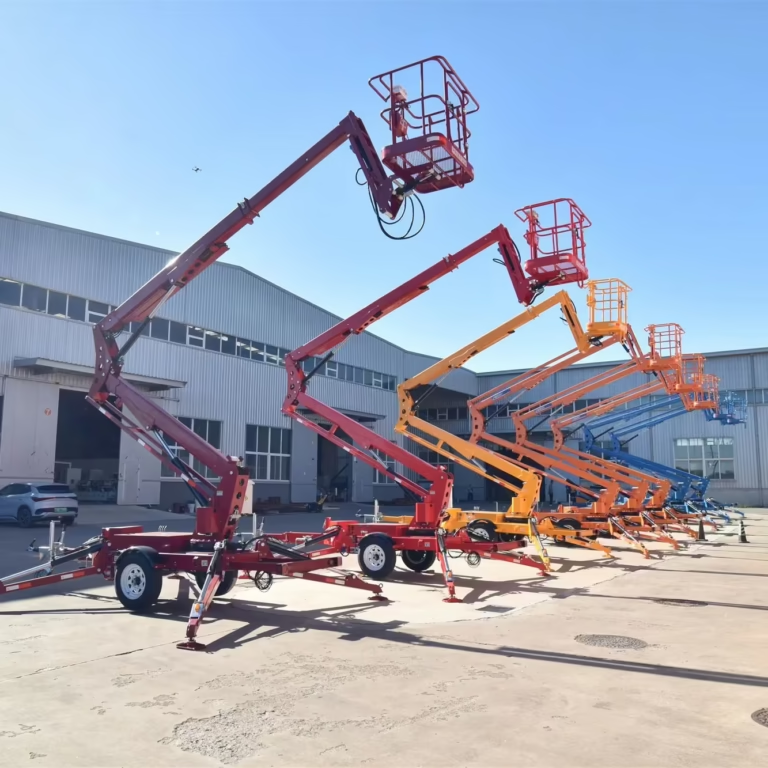
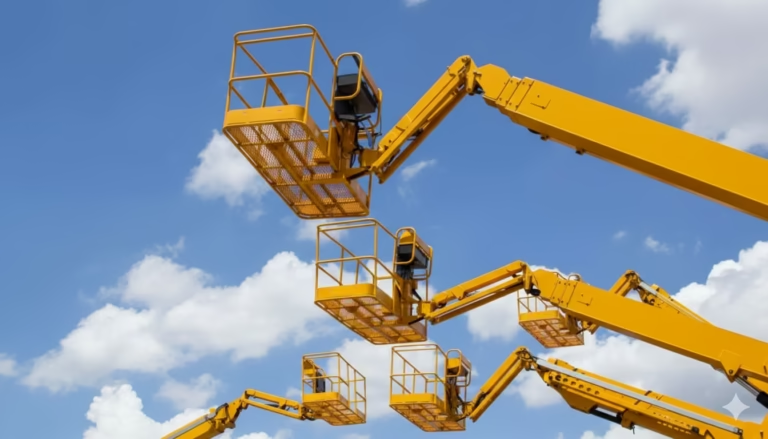
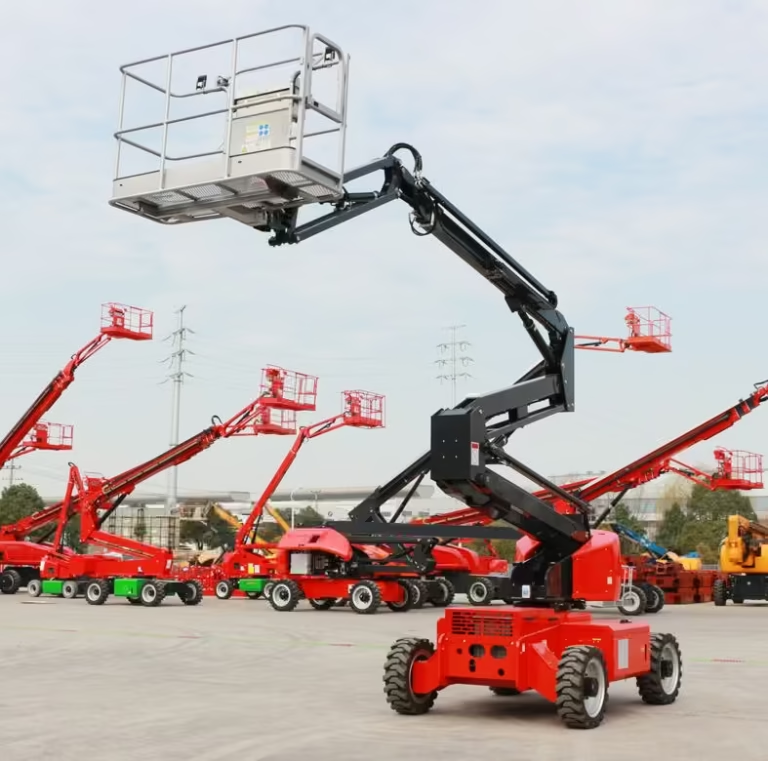
A Cherry Picker, or Boom Lift, uses a hydraulic arm (the boom) attached to a central turret or mast.
The core difference lies entirely in the lifting mechanism, which dictates everything else about the machine’s utility.
The ‘scissor’ mechanism consists of linked supports that fold and unfold in an “X” pattern. The hydraulic cylinders extend the bottom of the “X,” forcing the top of the “X” to rise.
Boom Lifts use a hydraulic arm (the boom) that pivots from a base, often mounted on a rotating turret.
| Feature | Scissor Lift | Cherry Picker (Boom Lift) |
| Primary Motion | Strictly Vertical (Up & Down) | Vertical, Horizontal, and Diagonal |
| Obstacle Clearance | None. Must be placed directly beneath the work area. | Excellent. Can maneuver over roofs, machinery, and piping. |
| Range (Outreach) | Limited by platform length; no horizontal outreach from the base. | Extensive. Can work many meters away from the base. |
| Feature | Scissor Lift | Cherry Picker (Boom Lift) |
| Platform Area | Large, spacious work deck (like a stage). | Small basket (focused on access, typically 1 or 2 workers). |
| Personnel | Often 2 to 4 workers. | Usually 1 to 2 workers. |
| Maximum Load | Generally higher lift capacity for its height (often 300kg to 10ton). | Varies by boom angle; typically maxes out around 480kg on the largest models. |
| Feature | Scissor Lift | Cherry Picker (Boom Lift) |
| Levelness | Extremely Strict. Must be used on a near-perfectly flat surface, especially when fully extended. | Less Strict. Many models have hydraulic stabilizers (outriggers) or oscillating axles to compensate for minor ground unevenness. |
| Footprint | Remains constant. The base footprint is the minimum required work area. | Varies. Requires space for the boom swing and for stabilizers (if equipped). |
| Feature | Scissor Lift | Cherry Picker (Boom Lift) |
| Indoor Models | Very popular. Electric, zero-emission models are standard for indoor slab work. | Common. Mast Lifts are specifically designed for low-noise, electric indoor use. |
| Outdoor Models | Available (often rough-terrain, diesel-powered). | Very common. Diesel power is standard for Telescopic and Articulating lifts that need power and gradeability. |
Choosing the correct machine translates directly into savings and safety.
You choose a Scissor Lift when the work area is directly above the base and you need maximum workspace and capacity.
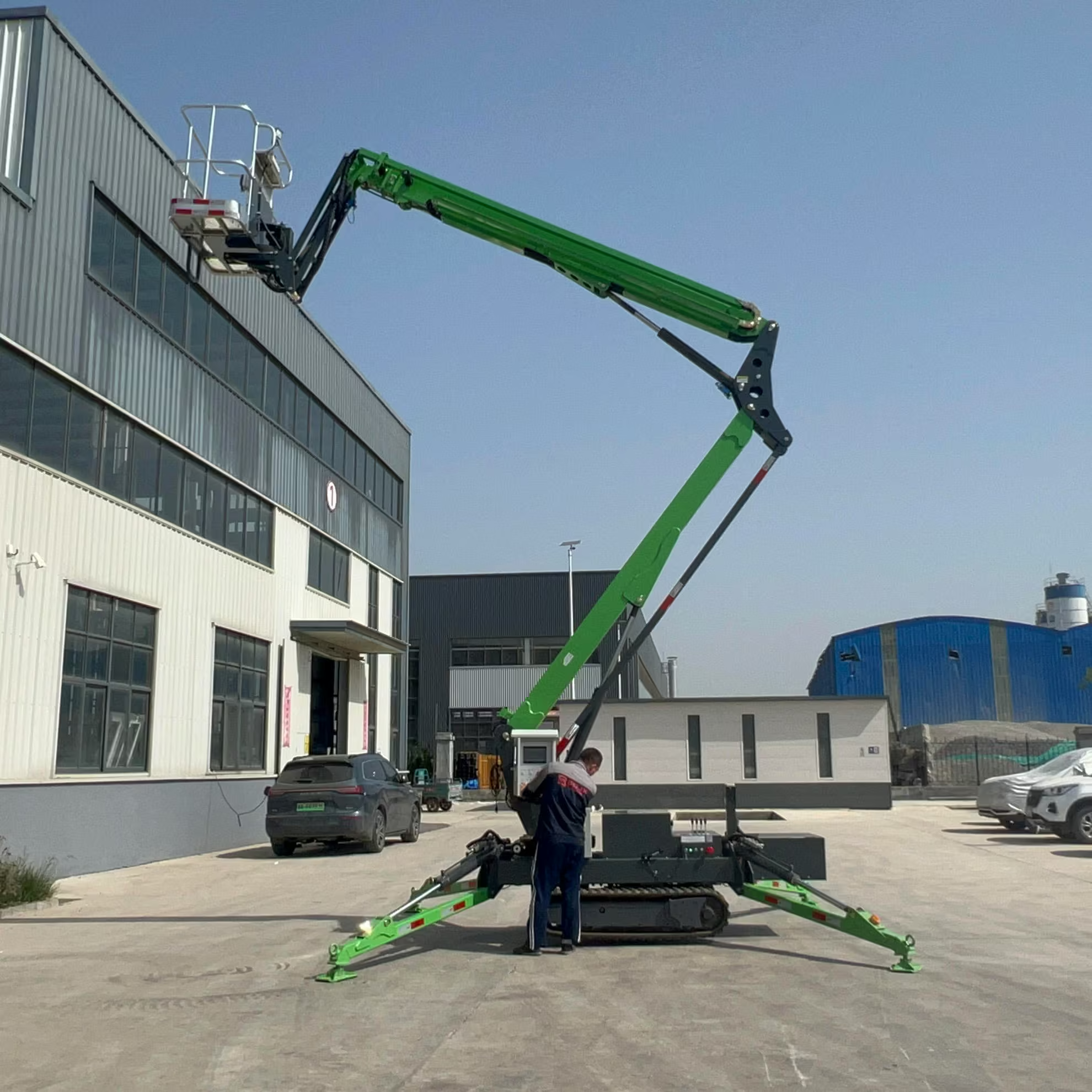
You choose a Cherry Picker when you need to reach up and out, bypass obstacles, or work in an area inaccessible by a vertical lift.
In the end, while both the Scissor Lift and the Cherry Picker are MEWPs designed to defeat gravity, they are not the same.
The Scissor Lift is the workhorse of vertical capacity, providing a large, stable deck for focused, straight-up tasks.
The Cherry Picker is the agile problem-solver, providing the essential outreach and flexibility required to navigate the most complex aerial obstacles.
For every job, the fundamental decision remains the same: Assess the worksite, check the necessary capacity, and choose the machine whose unique engineering best matches your access requirements—all while adhering strictly to safety protocols and certified training.