Address
Industrial Zone, Xinxiang City, Henan Province, China
Work Hours
Monday to Friday: 7AM - 7PM
Weekend: 10AM - 5PM
Introduction: The Single Most Important Number
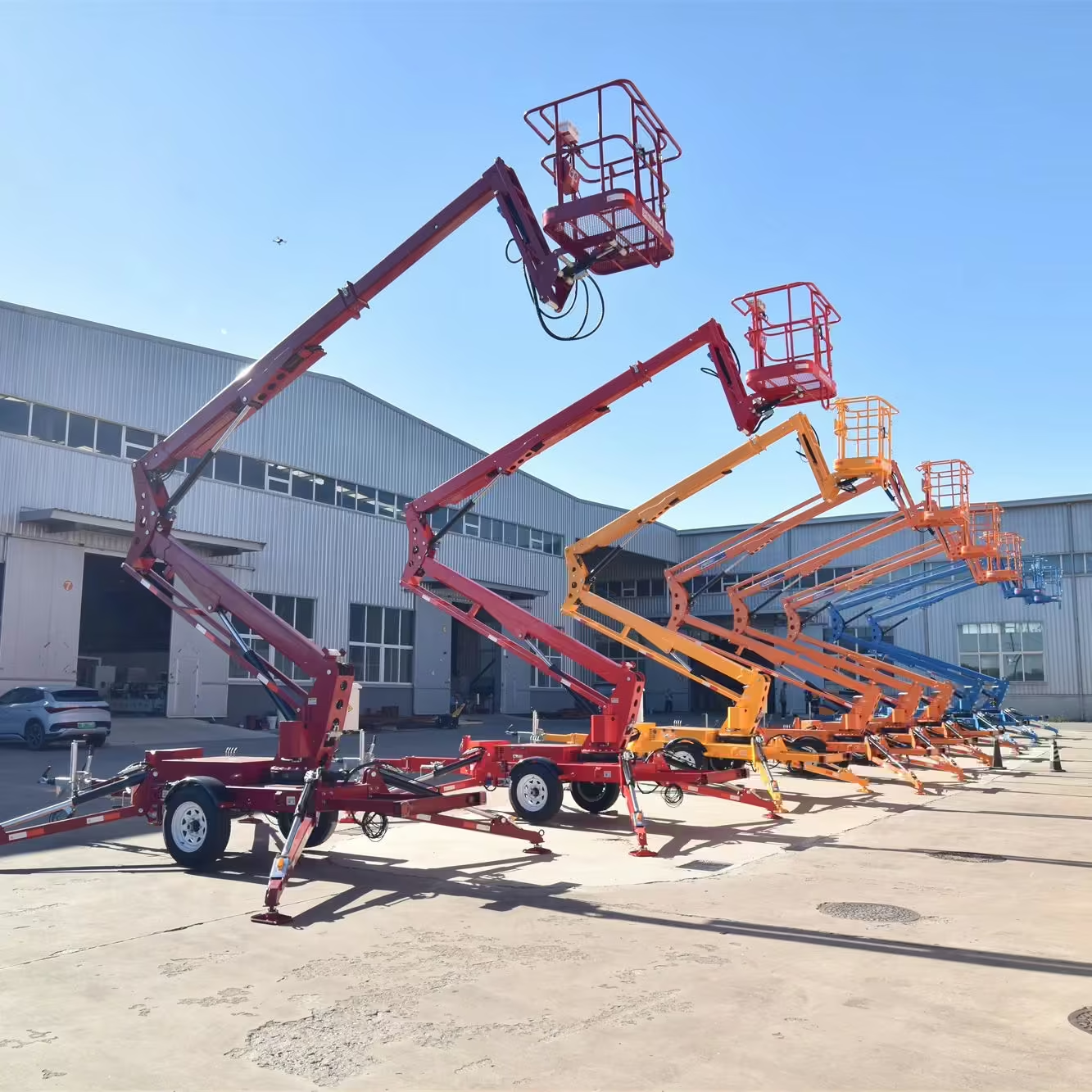
When tackling any job at height, from pruning trees to installing skyscrapers, the first question everyone asks is often: “How high can this go?” But the single most critical specification on any Cherry Picker (formally known as a Boom Lift or Mobile Elevating Work Platform, MEWP) is its Rated Capacity, or Safe Load Limit.
This number dictates the absolute maximum total weight the platform can carry while maintaining perfect stability. Ignoring it is not just unsafe—it’s illegal and often catastrophic. Understanding how this capacity is calculated, why it changes, and how modern lifts enforce it is essential for every operator and project manager.
This guide dives deep into the science and safety behind the Cherry Picker’s lifting power.
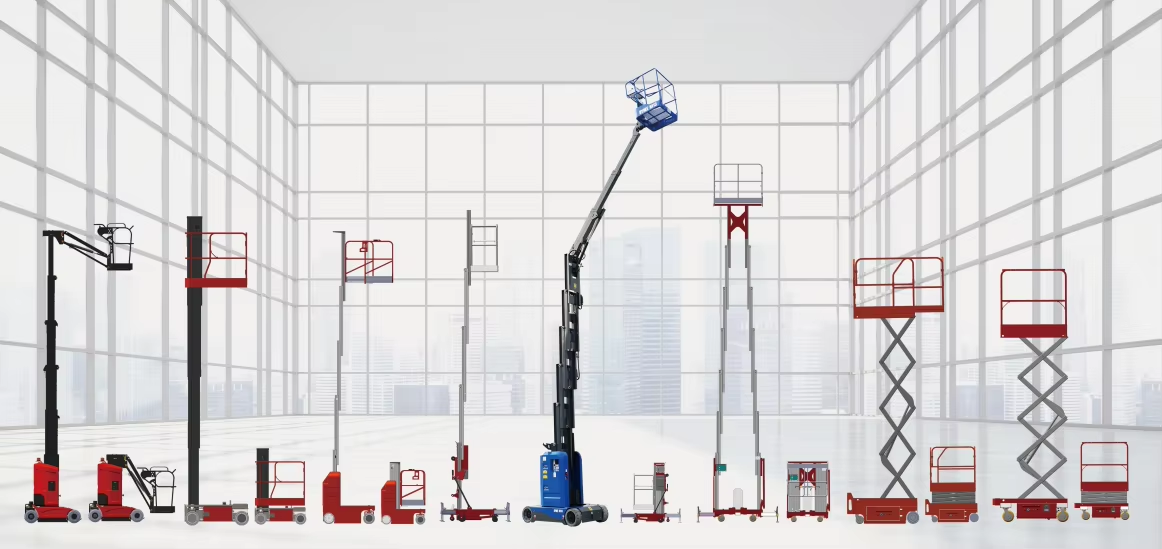
The Rated Capacity is the total weight allowed on the platform, and it must account for every single item and person in the basket. Think of it as a strict mathematical equation that must never be unbalanced:
Rated Capacity (kg or lbs)> Operator(s)Weight +Tools Weight +Materials Weight
Components of the Load:
The Golden Rule: If you are unsure of the weight of any component, overestimate it. If your final calculated weight exceeds the machine’s capacity, the machine is not suitable for that task.
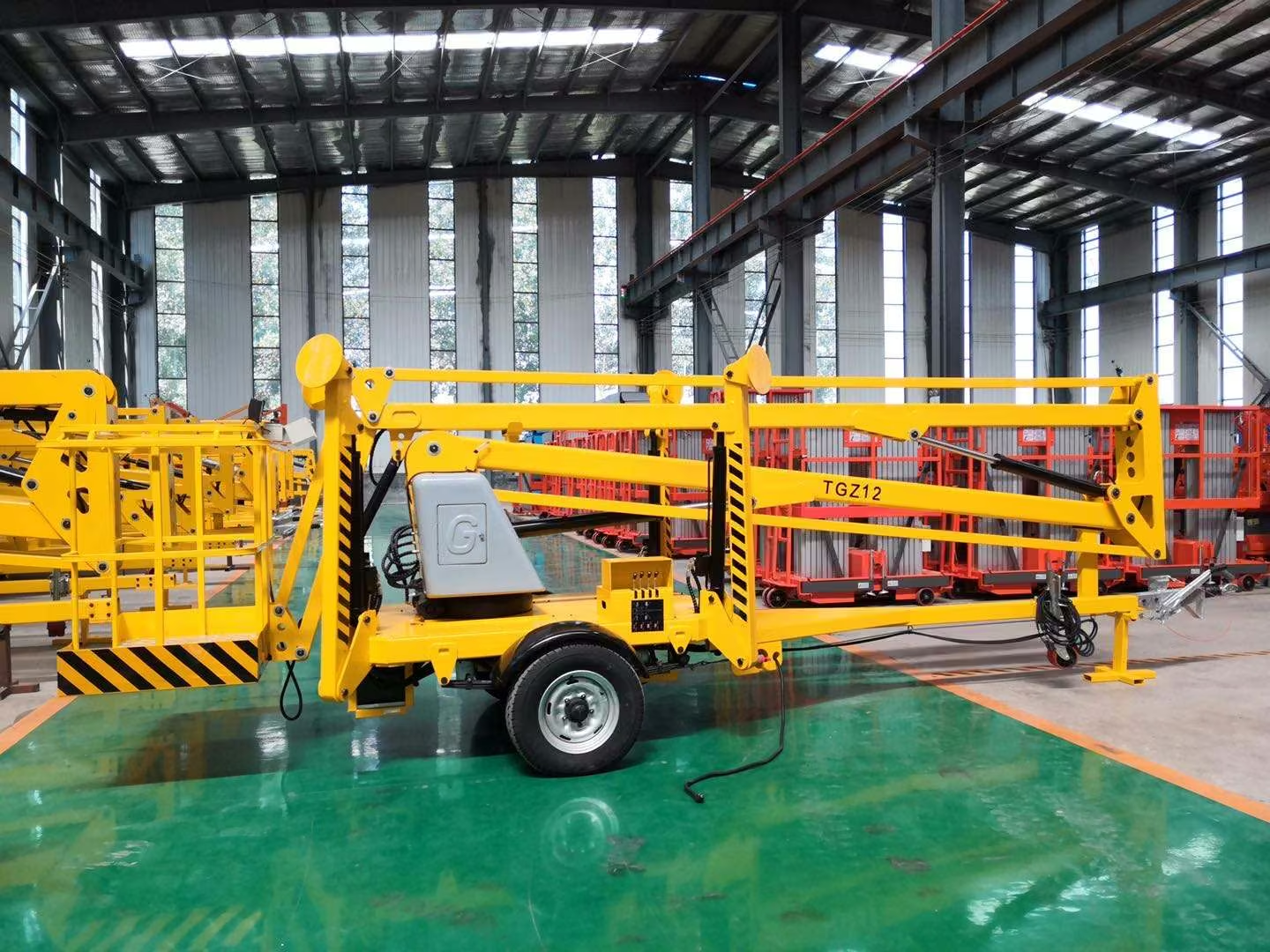
The capacity of a Cherry Picker is fundamentally linked to its structural design. A machine built for extreme horizontal reach cannot carry the same massive load as one built for straight vertical stability.
For most large Articulating and Telescopic Boom Lifts, the load capacity is not a constant. It is a dynamic variable that changes depending on the boom’s position, a relationship detailed in the machine’s Load Chart.
The further the boom extends horizontally from the machine’s base (known as the outreach), the greater the leveraging force against the chassis.
Load Chart Insight: The load chart is a safety diagram, usually a graph or table posted on the machine, that precisely shows the safe height and outreach combinations for the current load. Every certified operator is trained to understand and adhere to this chart.
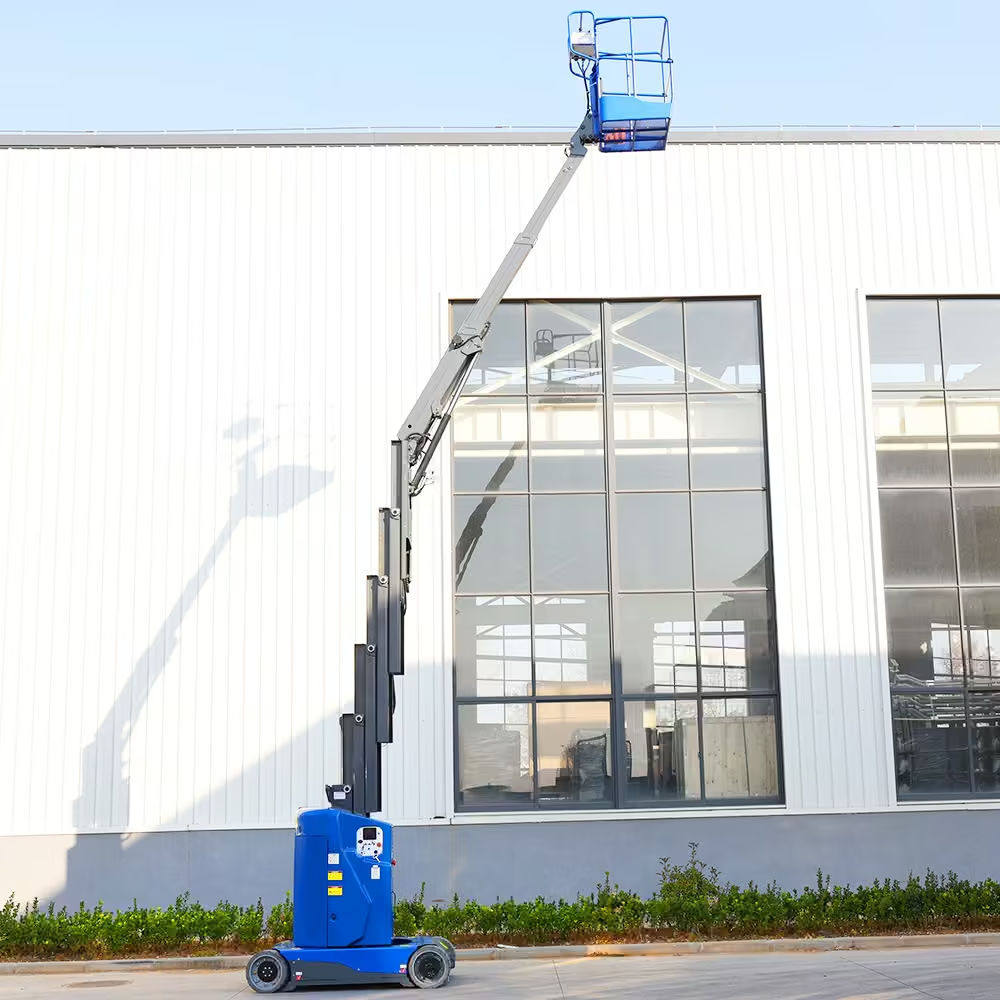
To maximize versatility on the job site, many modern, heavy-duty Cherry Pickers feature Dual Capacity or Restricted Capacity modes. This allows the machine to operate with two different load limits:
Practical Example: A lift might have an Unrestricted Capacity of 200 kg across its entire 18m reach. However, when working within 5m of its base, the Restricted Capacity might allow a 450 kg load. This allows crews to safely lift heavy materials right next to the machine without needing an entirely different piece of equipment.
The biggest difference between a modern MEWP and older machines is the electronic safety system designed to prevent overloading accidents:
This technology eliminates operator guesswork and provides an indispensable layer of protection against tipping or structural failure.
While a Cherry Picker is an incredibly powerful and versatile piece of machinery, its capacity is a strict limit imposed by the laws of physics and engineering.
The question “How much can a Cherry Picker lift?” should always be answered by consulting the machine’s specific Load Chart. Never rely on general figures.
By accurately calculating the total weight of personnel, tools, and materials, and by understanding the dynamic relationship between outreach and capacity, you ensure that your lift operates not only efficiently but, most importantly, safely. Always choose a machine that provides a safe margin above your calculated load requirements.